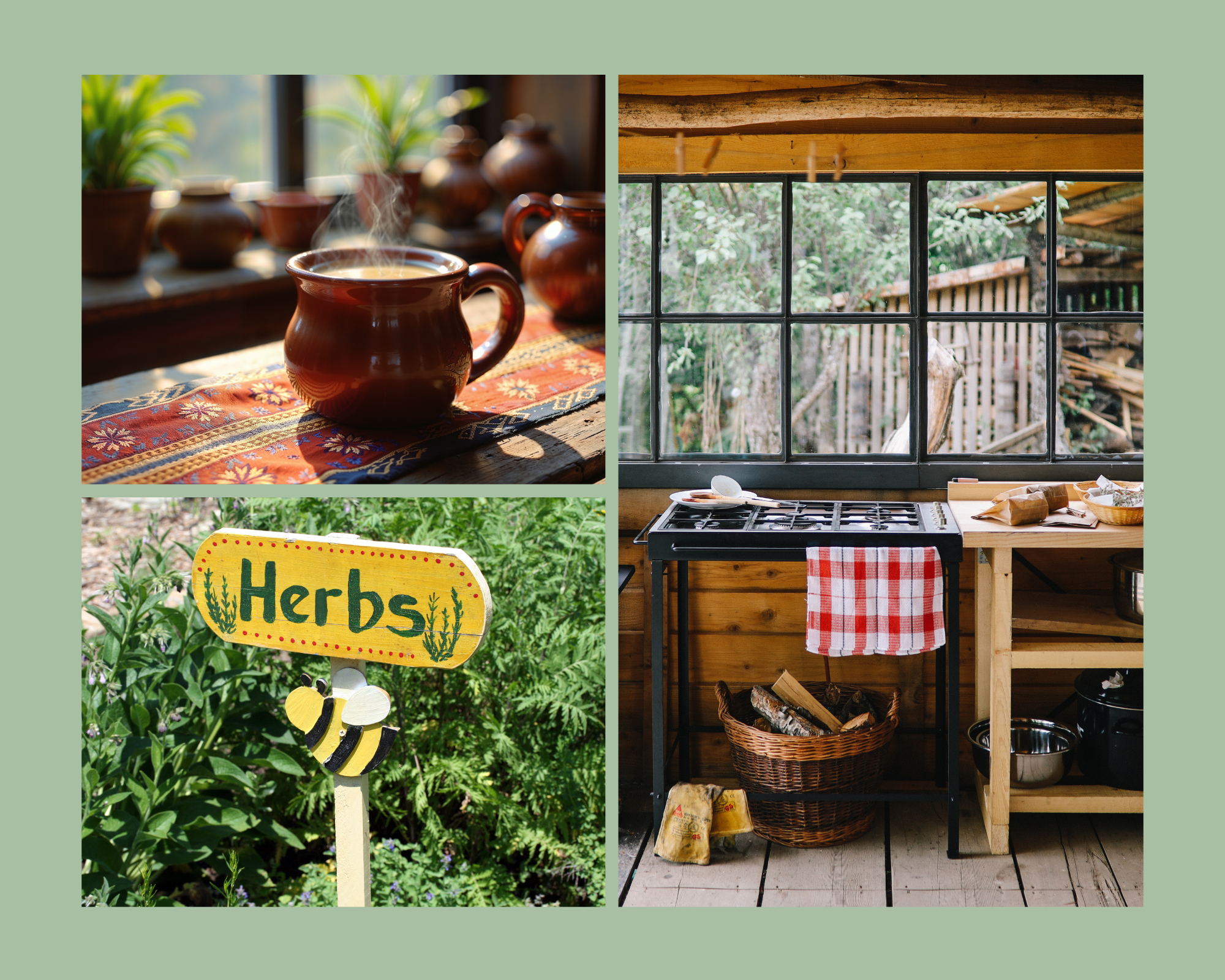

Arguably one of the oldest kinds of magic that doesn’t need candles or crystals at all – it happens at the stove, with a wooden spoon in hand and something simmering away. Kitchen witchery is one of the most accessible forms of everyday magic there is, and it’s one I come back to again and again, because it doesn’t ask you to be anything other than exactly where you already are: in your own kitchen, feeding the people you love.
Every Recipe is a Spell
At its heart, a spell is just intention plus action – and that’s exactly what cooking is. When you follow a recipe, you’re already measuring, combining, and transforming ingredients with a purpose in mind (nourishment, comfort, celebration, fostering health and wellbeing). Kitchen witchery simply asks you to be conscious of that intention instead of letting it happen on autopilot.
Before you start cooking, take a moment to decide what you want the message of this dish to carry. Is it comfort for a hard week? Warmth for the family table on a cold night? Healing for someone who isn’t feeling their best? Hold that thought as you cook, and let it guide small choices along the way – a stir done clockwise for growth, a pinch of something added along with a wish. The recipe doesn’t change. The intention behind it does.
Cooking as an Act of Love
For me, this is where kitchen witchery becomes something really personal rather than performative. Feeding my family has always been one of the clearest ways I know how to show love – and kitchen witchery just gives language to something I think a lot of us already do instinctively. Every soup simmered a little longer, every pudding made because someone mentioned missing it – that’s intention, whether we call it magic or not.
My love of cooking started, like so many of ours do, in the kitchens of the women who raised me. I spent hours watching my Mother and my Grandmother at the stove: the way they measured by eye rather than by the scales, the way they tasted as they went, and the way a pot of something on the hob seemed to hold the whole house together. They passed down recipes, of course, the family favourites (like the traditional Scottish lentil soup I have included below) that still turn up on my table today. But they passed down something else too, without ever putting it into words.
One of my most comforting memories from childhood is being given a plate of beans on toast. Nothing fancy, nothing cooked from scratch, just a tin and a toaster. It didn’t matter one bit. What I felt, sitting at that table, was love and care, and that’s what stayed with me. It’s taken me years to realise that this is the real magic of the kitchen. It’s not about the ingredients or the effort. It’s about the intention behind them.
I’ll be honest: that magic went quiet for a while. When I moved into my first flat in my early twenties, cooking just didn’t seem that important with only myself to feed. My kitchen saw far more instant noodles and takeaway menus than fresh ingredients! But when my husband moved in, something began to wake up again. I started remembering the things I’d learned watching at the stove, and together, through our shared love of food, we discovered how buying good ingredients and cooking from scratch could become one of the loveliest parts of everyday life.
That grew into something even more meaningful when our children came along. When I started them on solid foods, I was determined they’d be children who tried things. They didn’t always like them, and there were plenty of faces pulled and plates pushed away! But I truly believe the love and intention I put into cooking for them has shaped who they are now: older kids who enjoy food as much as we always have. And maybe one day they’ll stand at a stove, tasting as they go, and pass it all on again.
How to Embrace Kitchen Witchery in Practice
You don’t need to overhaul how you cook to bring more intention into it – small, simple practices are enough:
Speak as you cook. A few quiet words as you add a spice, stir a pot, or take a dish out of the oven can be as simple as “for health” or “for love” – said aloud or just held in mind.
Mark the start and finish. A moment of gratitude before you begin, and a small acknowledgement when the dish is done, turns cooking into more of a ritual than a task.
Start your own witch’s herb garden. Even a windowsill with a few pots of rosemary, thyme, and mint connects you back to your ingredients in a much more direct way than a supermarket packet ever could – and there’s something quietly powerful about cooking with something you’ve grown yourself.
The Magickal Properties of Common Kitchen Herbs
Every herb in your spice rack carries its own folklore and correspondence, built up over centuries of use. A few of the most common:
- Rosemary – protection, purification, remembrance, and love. Traditionally kept by the door for protection of the home.
- Thyme – courage, healing, and purification. Said to attract good health when used in cooking.
- Bay leaf – protection, wishes, and psychic clarity. Some traditions say to write a wish on a bay leaf and burn it after cooking.
- Cinnamon – prosperity, love, and spiritual energy. A warming spice associated with success and abundance.
- Sage – wisdom and cleansing. As useful in the kitchen as it is for clearing a space.
- Garlic – protection above all, one of the oldest protective ingredients in folk magic tradition.
- Nutmeg – luck, prosperity, and fidelity – lovely stirred into anything you’re making for someone you love.
Hearth and Kitchen Deities – and the Kitchen as a Sacred Space
Long before kitchen witchery had a name, most cultures had a god or goddess of the hearth – because the hearth was the heart of the home, quite literally where the fire (and therefore the food, warmth, and life of the household) came from.
For a Scottish kitchen witch, Brigid (or Bride, as she’s known in Scotland) feels like the obvious place to start – a Celtic goddess of the hearth, home, healing, and poetry, still honoured today through the tradition of Bride’s crosses and the festival of Là Fhèill Brìghde (Imbolc). Then there’s the Cailleach, the great winter hag-goddess of Scottish and Highland folklore, said to shape the land itself and rule over the darker half of the year – a fitting figure to think of as the nights draw in and we turn to slow-cooked, warming food. Beyond Scotland, Hestia (Greek) and Vesta (Roman) were both goddesses of the hearth and home fire, and Frigg in Norse tradition was closely tied to hearth, household, and domestic wisdom – worth a mention given Scotland’s own Norse heritage in the Northern Isles.
Treating your kitchen as a genuinely sacred space doesn’t need an altar – a candle lit while you cook, a clean and tended stove, or simply pausing to appreciate the room where so much love gets made are enough to honour that old tradition.
The Recipes
Traditional Scottish Lentil Soup
There’s no soup more Scottish than a big pot of lentil soup bubbling away on the stove. It’s the soup of every gran’s kitchen, school dinner hall and every cold Saturday afternoon. The secret to a proper one is a ham hough (pronounced “hoch”, the Scots word for ham hock), which gives the stock its deep, smoky, savoury flavour. It’s simple, cheap, and pure comfort in a bowl.
Makes: about 5 litres (12 generous bowls)
Prep: 20 minutes
Cook: about 3 hours, mostly hands-off
You’ll need: a large stockpot, at least 7–8 litres
Ingredients
For the stock
- 1 ham hough (about 1–1.2kg), smoked or unsmoked
- 4 litres cold water
- 2 bay leaves
- 1 tsp whole black peppercorns
For the soup
- 2 tbsp butter or oil
- 2 large onions, finely chopped
- 5 large carrots (about 700g), grated or finely diced
- 1/2 a turnip (swede or rutabaga), grated or finely diced
- 3 sticks celery, finely chopped
- 1 leek, washed and sliced (optional)
- 2 medium potatoes (about 400g), peeled and diced (I like to vary the size of the potatoes when chopped)
- 500g red lentils, rinsed well
- Freshly ground black pepper
- Salt, only if needed at the end (the hough is salty)
- A handful of chopped parsley to serve (optional)
Method
- Make the stock. Put the ham hough in your stockpot with the water, bay leaves and peppercorns. Bring to the boil, skim off any foam, then turn down the heat. Cover and simmer gently for 2–2½ hours, until the meat falls away from the bone. If your hough is very salty, soak it in cold water overnight first. Your butcher can tell you.
- Take out the hough. Lift it out carefully and set it aside to cool. Strain the stock and keep it. You should have about 3½ litres. If you have less, top up with water.
- Soften the vegetables. Rinse out the pot, melt the butter, and add the onions, carrots, celery and leek. Cook gently for 10 minutes, stirring now and then, until softened but not browned.
- Add the lentils and stock. Stir in the potatoes and the rinsed lentils, then pour in the ham stock. Bring to the boil, then lower the heat and simmer for 30–40 minutes, stirring from time to time so the lentils don’t catch on the bottom. The soup is ready when the lentils have broken down completely.
- Add the ham. While the soup simmers, pull the meat from the hough, discarding the skin, fat and bone. Shred it and stir it back into the pot.
- Blend, or don’t. This is where every Scottish family has its own opinion! Leave it chunky, or blend part of it with a stick blender for a thicker, smoother soup that still has some texture.
- Season and serve. Taste, add plenty of black pepper, and only add salt if it needs it. Serve with crusty bread or buttered oatcakes.
Tips for Big-Batch Cooking
- It thickens as it stands. Red lentils keep soaking up liquid, so the soup will be much thicker the next day. Just add a splash of water or stock when reheating.
- Freezing: let it cool quickly (divide it into smaller containers so it cools faster). It keeps in the fridge for up to 3 days, or in the freezer for up to 3 months. Portion it into single or family-sized tubs so there’s always a bowl ready.
- Slow cooker: you can make the ham stock in a slow cooker on low for 8 hours, overnight or while you’re at work, and then finish the soup on the hob.
- Stir often. In a big pot, lentils can easily stick to the bottom, so give it a good stir every 10 minutes or so.
A Vegetarian Version
Leave out the hough and use 3½ litres of good vegetable stock. Add 1 tsp smoked paprika with the vegetables to bring back a little of that smoky depth. It’s also very good with a spoonful of cumin.
A Kitchen Witch’s Note
Lentil soup is humble food, but that’s its magic. It’s made from what’s in the cupboard, stretched to feed a crowd, and shared with whoever comes through the door. Stir it slowly, stir it with love, and think of all the kitchens across Scotland that have made it exactly this way for generations.
Cullen Skink Risotto
Cullen skink is one of Scotland’s great comfort dishes: a thick, creamy soup of smoked haddock, potato and onion from the little fishing town of Cullen on the Moray Firth coast. The word “skink” is thought to come from an old Scots word for a shin of beef, which was once used to make the soup. The fishing families of the north-east made it with what they had to hand, and smoked haddock replaced the beef. This recipe takes all those flavours and gives them a slow, creamy stir on the hob as a risotto. It’s cosy, smoky, and perfect for a dark November evening.
Serves: 6
Prep: 15 minutes
Cook: about 40 minutes
You’ll need: a large, wide, heavy-based pan, plus two smaller pans
Ingredients
For poaching the haddock
- 500g undyed smoked haddock fillets
- 600ml whole milk
- 1 bay leaf
- ½ tsp black peppercorns
For the risotto
- 1.2 litres hot fish or vegetable stock
- 40g butter, plus an extra knob to finish
- 1 tbsp oil
- 1 large onion, finely chopped
- 1 large leek, washed and finely sliced
- 1 medium floury potato (about 250g), peeled and cut into small 1cm dice
- 450g risotto rice (arborio or carnaroli)
- 150ml dry white wine (optional; use more stock instead)
- 75ml double cream (optional, but lovely)
- Zest of ½ lemon, plus a squeeze of juice
- A small bunch of chives or parsley, finely chopped
- Freshly ground black pepper
- Salt, only if needed (the haddock and stock can be salty)
Method
- Poach the haddock. Put the haddock in a pan with the milk, bay leaf and peppercorns. Bring slowly to a gentle simmer, then turn off the heat, cover and leave for 5 minutes. Lift the fish out, remove the skin and any bones, and flake it into large pieces. Strain the milk into a jug and keep it warm. This is your flavour.
- Heat the stock. Keep the stock at a gentle simmer in another pan.
- Soften the vegetables. In your large pan, melt the butter with the oil. Add the onion and leek and cook gently for 8–10 minutes until soft and sweet but not browned. Stir in the diced potato and cook for 2 more minutes.
- Toast the rice. Add the rice and stir for 1–2 minutes until the grains are coated and slightly translucent at the edges. Pour in the wine, if using, and stir until it has been absorbed.
- Add the stock. Add the hot stock a ladleful at a time, stirring often and waiting until each ladleful is mostly absorbed before adding the next. Keep the heat at a lively simmer. This takes about 15 minutes.
- Add the haddock milk. Now switch to the warm poaching milk, adding it a ladleful at a time and stirring gently for about 5 more minutes. Keep the heat lower at this stage so the milk doesn’t catch. The rice should be creamy and just tender with a little bite, and the potato soft. If it needs more liquid, add a splash of stock or hot water.
- Finish. Take the pan off the heat. Gently fold in most of the flaked haddock, the cream, the extra knob of butter, the lemon zest and a squeeze of juice, and most of the chives. Season well with black pepper, then taste before adding any salt. Cover and leave to rest for 2 minutes.
- Serve. Spoon into warm bowls and top with the rest of the haddock, a scattering of chives and another grind of pepper.
To Serve
- Optional: a poached egg on top. Smoked haddock and a runny egg are a classic Scottish pairing.
- Optional: crispy leeks. Fry a handful of finely sliced leek in a little oil until golden and crisp, then scatter over the top.
- Serve with crusty bread or buttered oatcakes.
Tips for Big-Batch Cooking
Risotto is best eaten fresh, and it doesn’t freeze well. For a crowd, you can double the recipe in two pans, or cook one big batch in a very wide pan so the rice cooks evenly.
Leftovers: Chill quickly and use within a day. The best way to use them is to make Cullen skink cakes: shape the cold risotto into small patties, dip them in beaten egg and breadcrumbs, and fry until golden and hot through. They’re wonderful with a poached egg for breakfast!
A Kitchen Witch’s Note
Making a risotto requests that you slow down a bit. You can’t rush it, you can’t walk away from it, and you have to stay with it, stirring gently, ladle by ladle. It’s the perfect dish for a mindful evening in the kitchen: a little bit of Scotland’s coast, stirred slowly with care.
Slow Cooker Beef Brisket Stew with Herby Dumplings
Some meals are made for the darker half of the year, and this is one of them. Beef brisket, cooked low and slow for hours until it falls apart, with sweet carrots and sweet potato in a rich gravy, topped with fluffy herb dumplings. You spend a little time in the morning, and by evening the whole house smells like a hug.
Serves: 8
Prep: 30 minutes
Cook: 8–9 hours on low (or 5–6 hours on high), plus 40 minutes for the dumplings
You’ll need: a large slow cooker (at least 6 litres) and a frying pan
Ingredients
For the stew
- 1.6kg beef brisket, trimmed of excess fat and cut into 4–5cm chunks
- 3 tbsp plain flour, seasoned with salt and pepper
- 3 tbsp oil
- 2 large onions, thickly sliced
- 3 garlic cloves, crushed
- 2 sticks celery, sliced
- 4 large carrots, cut into chunky 3cm pieces
- 2 medium sweet potatoes (about 600g), peeled and cut into large 4cm chunks
- 2 tbsp tomato purée
- 1 tbsp Worcestershire sauce
- 250ml dark ale or red wine (or extra stock)
- 750ml hot beef stock
- 3 bay leaves
- 4 sprigs fresh thyme (or 1 tsp dried)
- 1 sprig fresh rosemary
- Salt and black pepper
For the herby dumplings (makes 12)
- 200g self-raising flour
- 100g suet (beef or vegetable)
- ½ tsp salt
- 3 tbsp fresh parsley, finely chopped
- 1 tbsp fresh thyme leaves
- 1 tsp fresh rosemary, very finely chopped
- About 150ml cold water
Method
- Brown the beef. Toss the brisket in the seasoned flour. Heat 2 tbsp oil in a large frying pan and brown the beef in batches, so it colours rather than steams. Transfer each batch to the slow cooker. This step is optional, but it gives the stew a much deeper flavour.
- Soften the onions. Add the remaining oil to the pan and fry the onions for 5–6 minutes until golden. Add the garlic and cook for 1 more minute. Stir in the tomato purée.
- Deglaze. Pour the ale or wine into the pan and let it bubble for a minute or two, scraping up all the tasty browned bits from the bottom. Add the stock and Worcestershire sauce and bring to a simmer.
- Fill the slow cooker. Add the celery and carrots to the beef, then pour over the hot liquid. Tuck in the bay leaves, thyme and rosemary. Season with pepper.
- Cook. Cover and cook on low for 8–9 hours, or on high for 5–6 hours, until the beef is meltingly tender.
- Add the sweet potato. Sweet potato softens much faster than carrot, so add it for the last 2 hours on low (or the last hour on high) so it keeps its shape. If you’d rather put everything in at the start, cut the sweet potato into bigger chunks, but it will soften more and help thicken the gravy.
- Make the dumplings. About 45 minutes before serving, turn the slow cooker to high. In a bowl, mix the flour, suet, salt and herbs. Add the water a little at a time, mixing with a knife, until you have a soft, slightly sticky dough. With floured hands, roll it into 12 balls.
- Cook the dumplings. Remove the herb stalks and bay leaves from the stew, taste and adjust the seasoning, then sit the dumplings on top of the stew, spaced apart. Put the lid back on and cook on high for 35–40 minutes, until they’ve puffed up and are cooked through. Don’t lift the lid while they cook!
- Serve in warm bowls, with a dumpling or two each, and some buttered greens or cabbage on the side.
Tips for Big-Batch Cooking
- Golden dumplings: slow cooker dumplings come out soft and fluffy rather than crisp. For golden tops, transfer the stew to an ovenproof casserole, add the dumplings, and bake uncovered at 190°C (170°C fan) for 20–25 minutes.
- Thicker gravy: if the gravy is thinner than you’d like, stir in 1 tbsp cornflour mixed with 2 tbsp cold water about 30 minutes before the end.
- Freezing: the stew freezes beautifully for up to 3 months, but freeze it without the dumplings, as they go heavy once frozen. When you reheat a batch, bring it to a gentle simmer on the hob, make a fresh half-batch of dumplings, and cook them covered for about 20 minutes.
- Make it ahead: like most stews, it tastes even better the next day.
- Safety: always use fully defrosted meat in the slow cooker, and cool leftovers quickly before refrigerating.
Herb Lore: The Magic in the Dumplings
The herbs in this stew have been used in kitchens, gardens and folk remedies for centuries, and each one comes with its own story.
Thyme: courage. Thyme has long been linked with bravery. The Romans are said to have bathed in it for strength, and in medieval times ladies would embroider a sprig of thyme onto a scarf for their knights. In Scottish folklore, Highlanders were said to drink wild thyme tea for courage and to keep away nightmares. It’s also said to be a favourite of the fairies, and in Shakespeare’s A Midsummer Night’s Dream, the fairy queen sleeps on “a bank where the wild thyme blows”.
Rosemary: remembrance. “There’s rosemary, that’s for remembrance,” says Ophelia in Hamlet. Students in ancient Greece were said to wear it in their hair to help their memory, and it was carried at both weddings and funerals, for love and for remembering. An old saying goes that rosemary only thrives in a garden where the woman rules the house!
Parsley: patience. Parsley is famously slow to germinate, and old country lore says the seeds go down to the devil and back several times before they come up. In ancient Greece it was linked with death and used to crown victorious athletes. Today it’s a symbol of freshness and new life, which is lovely in a winter dish.
Bay: protection. Sacred to Apollo, bay laurel was woven into crowns for poets and victors in ancient Greece and Rome. It was also believed to protect against lightning and bad luck. Some people still write a wish on a bay leaf and burn it.
A Kitchen Witch’s Note
In Gaelic tradition, moving deiseil, sunwise or clockwise, was believed to bring good luck and blessings. Many kitchen witches still stir their pots clockwise to draw good things in. So as you stir the herbs into your dumplings, give it a clockwise turn and think of courage, remembrance, patience and protection for everyone who’ll sit at your table.
Baked Rice Pudding with Whisky-Soaked Sultanas
Few things say “comfort” like a dish of baked rice pudding coming out of the oven, all golden-skinned and smelling of nutmeg and vanilla. This is the old-fashioned kind: slow-baked, creamy and deeply soothing. Spooned over the top are sultanas soaked in whisky until they’re plump, warm and glowing. It’s a traditional British pudding with a proper Scottish twist.
Serves: 8
Prep: 10 minutes (plus soaking time for the sultanas)
Cook: 2–2½ hours
You’ll need: a large buttered ovenproof dish (about 2.5–3 litres) and a small saucepan
Ingredients
For the rice pudding
- 30g butter, plus extra for greasing
- 150g pudding rice
- 75g caster sugar (or light brown sugar for a more caramel flavour)
- 1.2 litres whole milk
- 300ml double cream
- 1 vanilla pod, split (or 1 tsp vanilla extract)
- 1 bay leaf (optional, but traditional)
- 1 strip of lemon zest (optional)
- Whole nutmeg, for grating
For the whisky-soaked sultanas
- 150g sultanas
- 100ml Scotch whisky (a sherry-cask Speyside works beautifully)
- 1 tbsp honey (heather honey if you can find it) or soft brown sugar
Method
- Soak the sultanas. Put the sultanas, whisky and honey in a small pan and warm them gently over a low heat until just steaming. Don’t let it boil, and keep it well away from open flames, as the whisky is flammable. Take it off the heat, cover, and leave for at least 30 minutes. Longer is even better, and they can soak overnight.
- Heat the oven to 150°C (130°C fan) / gas mark 2. Butter your ovenproof dish generously.
- Fill the dish. Scatter the rice and sugar into the dish. Pour in the milk and cream, and add the vanilla pod (or extract), bay leaf and lemon zest if using. Stir well, dot the butter over the top, and grate over a generous amount of nutmeg.
- Bake. Put it in the oven for 30 minutes, then take it out and give it a good stir to break up the rice. Do this once more after another 30 minutes.
- Leave it alone. Then let it bake undisturbed for a further 1–1½ hours, until the rice is soft and creamy and a golden skin has formed on top. It should still be slightly loose when you take it out, as it thickens as it cools.
- Rest. Leave it to stand for 10–15 minutes. Remove the vanilla pod, bay leaf and lemon zest if you can find them!
- Serve. Spoon the pudding into warm bowls and top each one with a spoonful of the whisky sultanas and a little of their syrup.
A Family Version
The whisky doesn’t cook off in this recipe, so for children, or anyone avoiding alcohol, soak a separate batch of sultanas in warm apple juice or cold black tea with a little honey. They’ll be just as plump and sweet.
Tips for Big-Batch Cooking
- The skin: some people love it, some pass it on to someone else! Whichever camp you’re in, the best way to get a good skin is not to stir the pudding in its final hour.
- Storage: leftovers keep in the fridge for up to 2 days. Eat it cold, or reheat gently with a splash of milk.
- Keep a jar of whisky sultanas: the whisky preserves them, so a jar in the fridge will keep for several weeks. They’re lovely spooned over porridge, ice cream or cranachan too.
- Freezing: rice pudding doesn’t freeze well, so this is one to enjoy fresh.
A Kitchen Witch’s Note
Nutmeg has long been treasured in kitchen folklore. It was once carried in pockets as a lucky charm, and it’s said to bring good fortune and warmth to the home. Grate it over your pudding with a wish for everyone at your table. Pair that with a little of Scotland’s water of life, and you have a pudding that’s pure comfort, with a touch of magic.
As a committed bibliophile, I’ve included a small selection of excellent books that will help you take your kitchen witchery to the next level:
A beautifully made guide to the magic already sitting in your cupboards. Skye Alexander explores the meanings and properties of 100 everyday ingredients, from dark chocolate for love to figs for creativity and onions for protection, and shows you how to turn your favourite recipes into little acts of spellwork. It’s warm, practical and easy to dip into, perfect for anyone who wants to stir a bit of intention into their everyday cooking: https://amzn.to/4hTP2Kt
The perfect book for anyone who wants their kitchen to feel like a cosy witch’s cottage. Kitchen Magic weaves recipes and simple rituals together, so every dish becomes a chance to cook with intention and bring a little enchantment to your table. It’s warm, inviting and beautifully witchy, and it’s ideal for beginner kitchen witches and seasoned practitioners alike. Curl up with it and a cup of tea, then head to the stove to stir a little magic into your next meal. It would make a lovely gift, too: https://amzn.to/4yjAUjv
Simple Kitchen Magic gathers wholesome, nourishing recipes alongside simple home remedies, all rooted in the idea that caring for yourself and your family begins in the kitchen. It’s a lovely companion for anyone drawn to a slower, more intentional way of living, where the stove is the heart of the home and every meal is a small act of love and care. Keep it by the kettle for when you need a little inspiration: https://amzn.to/4jxodwU
As an Amazon Associate I earn from qualifying purchases. Some of the links in this post are affiliate links, which means I may earn a small commission if you make a purchase through them, at no extra cost to you. It genuinely helps keep this blog going, so thank you if you do choose to use them. That said, please do also consider supporting small, independent businesses and your local bookshop where you can — it makes a real difference to them, and often you’ll find something lovely you wouldn’t have otherwise.
Here is a link to my “Practical Magic Kitchen” Benable page: https://benable.com/brackenandblossom/the-practical-magic-kitchen
If you are not familiar with Benable, it’s where I create and share curated shopping lists — a bit like a digital wishlist you can browse, save, and shop from directly. It’s where all my witchy glamour, beauty, and home recommendations live in one place, so you can always find my full, up-to-date picks there rather than just what’s in a single blog post. Again, this includes some affiliate links, which means I may earn a small commission if you shop through them, at no extra cost to you. I only ever recommend things I genuinely use and love, so you can trust these picks are the real deal, not just filler.
Slow down and stay captivated,
Rowan 🍂
.

Leave a Reply